Remember those books we read in English class? Required readings that we read but most likely didn’t fully understand or even care about, and then wrote what were most likely very lame papers about.
Looking back at some of those required readings, there were strong messages in the books. It’s interesting to revisit those books now, as adults and consider the messages they were trying to convey to us.
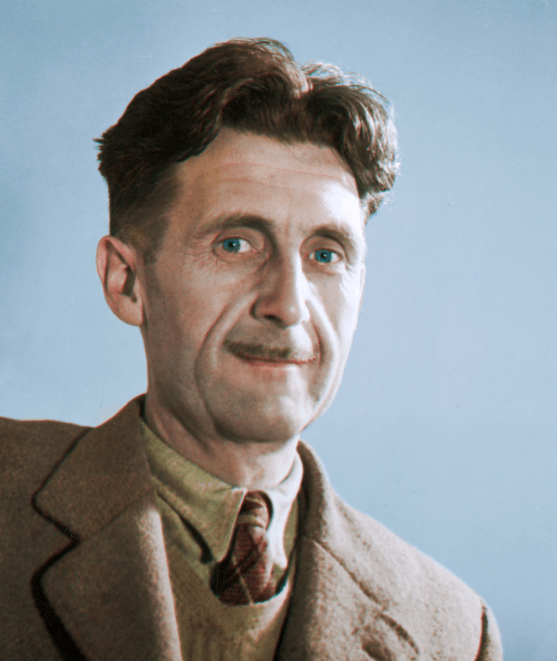
George Orwell was the pen name of Eric Arthur Blair, an English writer from the early 1900s. He’s best known for the novels Animal Farm and Nineteen Eighty-Four. He also wrote non-fiction books and essays on politics, literature, language and culture.
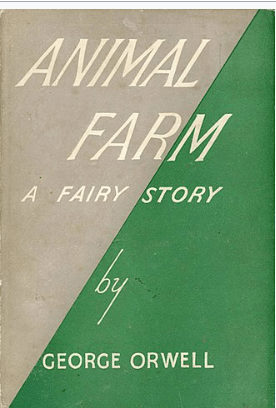
I remember reading Animal Farm and having a general idea about the concepts being addressed; Napoleon, the pig, who ruled the farm animals with an iron fist, er, hoof. But, according to Orwell’s descriptions it was actually about the events leading up to the 1917 Russian Revolution and the events leading up to the Stalinist era of the Soviet Union. (https://en.wikipedia.org/wiki/Animal_Farm). By presenting these ideas using farm animals it made it easier for people, including younger people to understand the dynamics of the power struggles. There was a level of interest and drama in the book that held the reader’s attention much more than writing about Stalin would have.
Orwell created a list of Four motives for writing, which include “Political Purpose”. He described the desire political writers have to push the world in a certain direction. “…The opinion that art should have nothing to do with politics is itself a political attitude”.
“Why I Write”, an essay written by Orwell in 1946 is such a great insight into the mind and motivation of a well-respected writer. In the essay, he lists the “Four great motives for writing”, with number 4 being: “Political purpose – using the word ‘political’ in the widest possible sense. Desire to push the world in a certain direction, to alter other people’s idea of the kind of society that they should strive after. Once again, no book is genuinely free from political bias. The opinion that art should have nothing to do with politics is itself a political attitude.”
(source: https://www.orwellfoundation.com/the-orwell-foundation/orwell/essays-and-other-works/why-i-write/)
More about George Orwell: https://commons.wikimedia.org/wiki/File:George_Orwell,c._1940(41928180381).jpg
 The Art of Peaceful Protest