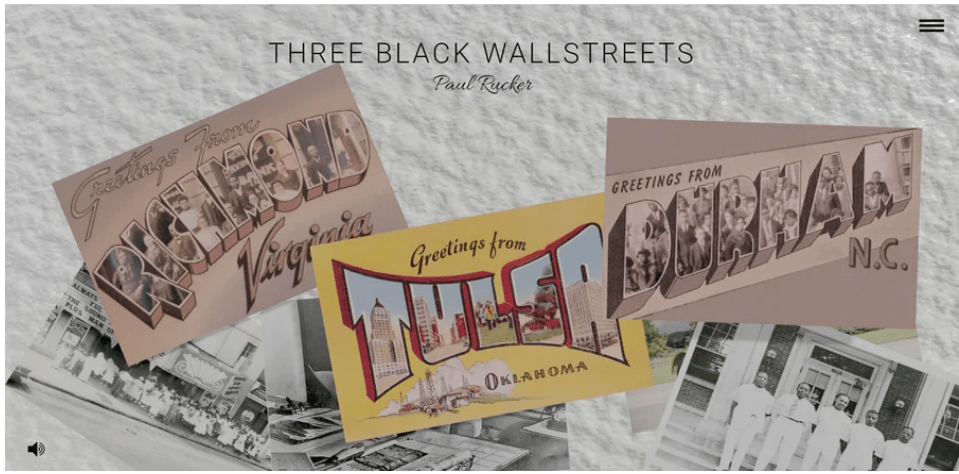
The first time I heard about Black Wall Street was more than 10 years after I graduated college. I do not remember hearing about the Black Communities that created thriving financial services in their towns which led to a number of black businesses prospering in the time after slavery ended but during the Jim Crow Era.
https://www.threeblackwallstreets.com/
Richmond Virginia, Tulsa Oklahoma, and Durham North Carolina all had black neighborhoods where the residents created their own financial services and banks and created successful networks to support businesses.
The cities were destroyed and multiple thousands of people died by those who came to destroy what they had built, but Paul Rucker refuses to include the pictures of the destruction and violence. Instead, he wants history to show how successful they were.
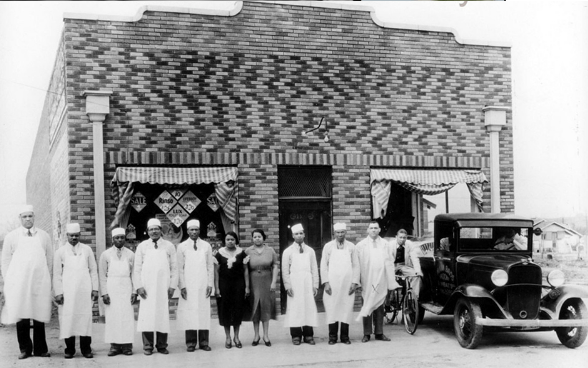
Since I’ve worked in banking and mortgage I’ve learned a lot about Red Lining, the practice of not lending to certain neighborhoods, or types of people, and the practice of condemning homes and businesses in black neighborhoods in order to run freeways through them.
By keeping black areas poor and underfunded, state, city and local governments were able to justify the significantly lower funds given to schools in those areas. But most of us never really learn about how systemic racism has stayed imbedded in our society.
Paul Rucker has created interactive art projects that are meant to share this vital but missing history, make sure people understand how they were destroyed by white violence against them, and to humanize the victims of the violence. He was the first Artist in Residence at the Smithsonian National Museum of African American Art and Culture: National Museum of African American History and Culture.
In this NPR article, https://www.npr.org/2021/05/31/1000215563/artists-black-wall-street-project-is-about-tulsa-100-years-ago-and-today they include a 6 minute Ted Talk by Paul Rucker where he talks about his work to collect artifacts in order to keep the history alive, as well as shows the variety of Ku Klux Klan robes that he’s made out of African fabrics as a way to own the history.
The article outlines Paul Rucker’s broad spectrum of work that he does to keep the history alive and to make sure everyone knows the history that so many have tried to erase.
 The Art of Peaceful Protest
Thank you Jennifer for your excellent articles bringing information to us about black history. You are so right about most of us not being educated to the facts brought forth in these articles.
LikeLike