(DISCLAIMER: This site and the posts included are not intended to support, or not support, any specific political, religious, or other ideology. While the art and posts shared herein may highlight certain political references, the intention is to educate the reader on the use of art in protest. NOT to advance, support, or endorse any religious, political or other ideologies. This blog is intended to be educational and the information shared is solely for educational purposes)
As long as humans have incorporated politics within societies, there have been those who turn to the arts to protest the people that engage in politics. Studying political protests can give a person a deeper understanding of what was happening at certain times. They can also be a valuable way to gain insights into understanding how the people of the times felt about their leaders, politics, religions, neighbors, etc.
Poetry is one such medium that has been around for about as long as language has existed, and has been used to highlight beauty, create songs, have fun, etc. It’s also been used for peacefully using words to share strong opinions..
For centuries, poetry has been a strong tool for peacefully protesting a wide range of political woes.
The Poetry Foundation has a collection of “Poems of Protest, Resistance, and Empowerment” (https://www.poetryfoundation.org/collections/101581/poems-of-protest-resistance-and-empowerment) which include this description that I feel sums it up well:
“Pithy and powerful, poetry is a popular art form at protests and rallies. From the civil rights and women’s liberation movements to Black Lives Matter, poetry is commanding enough to gather crowds in a city square and compact enough to demand attention on social media. Speaking truth to power remains a crucial role of the poet in the face of political and media rhetoric designed to obscure, manipulate, or worse. The selection of poems below call out and talk back to the inhumane forces that threaten from above. They expose grim truths, raise consciousness, and build united fronts. Some insist, as Langston Hughes writes, “That all these walls oppression builds / Will have to go!” Others seek ways to actively “make peace,” as Denise Levertov implores, suggesting that “each act of living” might cultivate collective resistance. All rail against complacency and demonstrate why poetry is necessary and sought after in moments of political crisis.”
This first example is from the early Greeks upset about the the Peloponnesian War, fought 431-404BCE, an excerpt from a poem written by Aristophanes to criticize both sides of the war.

DICAEOPOLIS
First, I detest the Spartans most extremely;
And wish that Neptune, the Taenarian deity,
Would bury them in their houses with his earthquakes.
For I’ve had losses–losses, let me tell ye,
Like other people; vines cut down and injured.
But among friends (for only friends are here),
Why should we blame the Spartans for all this?
For people of ours, some people of our own,–
Some people from among us here, I mean:
But not the People (pray, remember that);
I never said the People, but a pack
Of paltry people, mere pretended citizens,
Base counterfeits,–went laying informations,
And making a confiscation of the jerkins
Imported here from Megara; pigs, moreover,
Pumpkins, and pecks of salt, and ropes of onions,
Were voted to be merchandise from Megara,
Denounced, and seized, and sold upon the spot.
Ancient Rome also had their share of protest, including this example of political satire from Juvenal (Decimus Junius Juvenalis), a writer of satirical poems around the end of the 1st and beginning of the 2nd century.
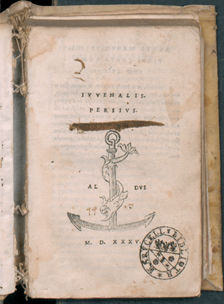
For more details – here’s a blog I found that also explores his work:
https://theconversation.com/guide-to-the-classics-juvenal-the-true-satirist-of-rome-106156 )
It’s clear from his work that he had A LOT of opinions about A LOT of topics and didn’t mind giving his fellow Romans a piece of his mind. Wikipedia includes descriptions of his satires (https://en.wikipedia.org/wiki/Satires_(Juvenal))
“The first satire begins with the words, “semper ego auditor tantum…” (lit. ‘always, I am only heard’). Within this satire, Juvenal says his disgust in the spread of moral corruption has driven him to write satire. He says, “difficile est saturam non scribere” (lit. ‘it is difficult to not write satire’), since there is so much to criticize in Rome. He lists eunuchs getting married, elite women performing in a beast hunt, and the dregs of society suddenly becoming wealthy by gross acts of sycophancy, all as examples of widespread degeneracy. Overall, he sets the theme for his satires and emphasizes the power of it to expose wrongdoing– crediting Lucilius in doing so.”
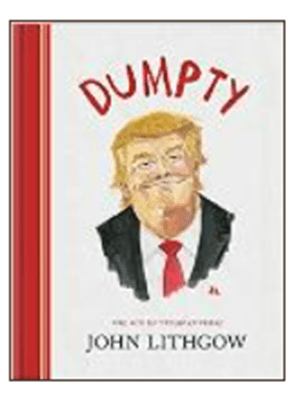
I was pleasantly surprised this week to find out that John Lithgow, accomplished actor and academic (https://en.wikipedia.org/wiki/John_Lithgow) has written 2 books of poetry in response to the US President that he clearly is not a fan of. He published “Dumpty: The Age of Trump In Verse” in 2019, and “Trumpty Dumpty Wanted a Crown” in 2020.
“Political satire from John Lithgow? No one is more surprised than I. I’m a grizzled thespian, not much known for my politics, and pretty far along in life to head off in such a wildly different direction.” John Lithgow
See this blog post from Powell’s City of Books in Portland, OR: https://www.powells.com/post/original-essays/the-birth-of-dumpty-a-song-a-sunset-and-a-talk-show
An exerpt:
“Trumpty Dumpty wanted a wall
To Stir up a rabid political brawl.
His Republican rivals, both feckless and stodgy;
Succumed in the end to his rank demagogy.”
He continues in the book to take on a list of prominent Republicans with poem titles such as “Scaramouche”, “The Gentlemen of the Defense”, “Kavanaughty”, etc.
A 2nd book was completed and published in 2020, titled “Trumpty Dumpty Wanted a Crown”. It contains updated poems satirizing and skewing the new administration. One example is “Bill, Barr The Door!”
“AG Barr, that faithful sentry,
Guards the Oval Office entry.
Though he stays all legal action,
He should check self-satisfaction:
Add a single scandal more
And he’ll be frog-marched out the door.”
In these books, he’s definitely getting his points across. And by presenting the ideas in poetry/nursery rhyme format, it’s easier to read and understand his points. As always, I am sharing just a few examples of art being used to protest and for people to stand up for what they believe in. I’d love to hear your thoughts, suggestions for topics, and referrals to artists who are speaking out with their art.
Many people may consider poetry to be old and boring, but it’s been used for 1,000s of years as a tool for peaceful protest. People seem to connect with rhythmically rhyming verses which makes poetry an effective way to get one’s point across.
Please feel free to send examples that you find along the way.
I always enjoy discovering new sources of peaceful protest in action!
 The Art of Peaceful Protest