What I love about the use of art as a form of protest is that you can say things, and make bold statements under the guise of art, or creative license that you couldn’t say otherwise. If I were to say that a specific person was stupid, I would be expected to provide proof of their stupidity to defend myself making that accusation.
However, if I wrote a story about a President named “Harump” and another President named “Sliden”, and then went on to share descriptions of how they were incompetent and idiotic, then most people would understand it to be satire and hopefully laugh at it and move on. Even if it was a thinly veiled effort to discredit real people, by making it “fictious” then it would grant me the creative license to literally say what ever I wanted to.
There is so much art out there that tells stories based on real-life events, but with just enough changed details that it can be considered fiction. But we watch the movies and read the stories and are able to enjoy the entertainment factor while still (hopefully) picking up on the underlying truths being told.
One great example of this is the 1993 book “Wag the Dog”. The movie is based on a book by Larry Beinhart, originally called ‘American Hero’, but was updated 2004 with a new title and more current event details. The story was a satire that speculated on Operation Desert Storm being a ploy to get President Bush reelected. (https://en.wikipedia.org/wiki/Wag_the_Dog_(novel))
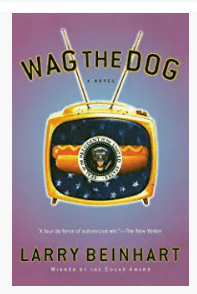
In 1997 a movie was made based on the book, named “Wag The Dog”. It was directed by Barry Levinson, and starred Dustin Hoffman and Robert De Niro. The movie’s premise is based on an effort to distract American’s from a Presidential sex scandal by fabricating a war in Albania. The producers create this whole story about a soldier who got left behind enemy lines, “discarded like an old shoe”, then head out to with find a good solider to use as a hero for the story, with a name that includes “Shoe”.
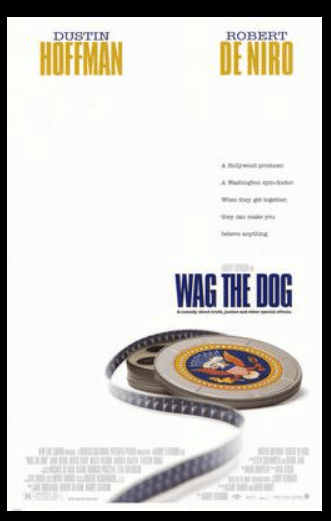
https://en.wikipedia.org/wiki/Wag_the_Dog
Ironically, the 1997 movie was released just one month before the Clinton/Lewinski scandal broke. A coincidence or Art imitating Life?
I view “Wag the Dog” as a great example of the ability to use satire to make strong political messages. Changing the names and in some ways the circumstances, allows one to tell a story that may obviously be about a specific person and/or situation, but because it’s presented as fiction it isn’t considered slander. Many people would be turned off by a politically biased non-fiction documentary, but present the same story with names and places changed, make it fictionalized and add some one-liners, and now you have a hit movie that thousands of people will watch.
My hope that more artists would be inspired to tell important stories via satire or thinly veiled fictious stories so that the ideas get out there and make people think.
 The Art of Peaceful Protest
I agree that it is important to get information out in the world in a super accessible way. It worries me however, that in the use of satire you can get away with saying anything you want, fact or fiction, and people will just believe you. It is so important to keep your satire stories factual to avoid the spreading of misinformation.
LikeLike